Do you remember the last time you wanted to know about a certain product or buy something quickly? You probably opened Google, Instagram, YouTube, or some app without even thinking twice. That is the place where businesses want to meet you, too. In a way that feels natural. That whole process of connecting with people through the internet? That’s digital marketing. No complicated definitions needed. It’s simply how brands promote themselves online and build relationships with people like you and me.
The core of Digital Marketing
So… what exactly is digital marketing?
Digital marketing is the strategy brands use to expand growth and to promote their products to the target audience online. The results that pop up immediately at the top after you enter your search is the magic of digital marketing in play. The Instagram reel showing a cool gadget? Also, digital marketing. Digital marketing often doesn’t feel like marketing at all, but more like aligning products and services to customers’ interests. And that is the whole point of digital marketing altogether.
What Constitutes Digital Marketing?
Digital marketing niches
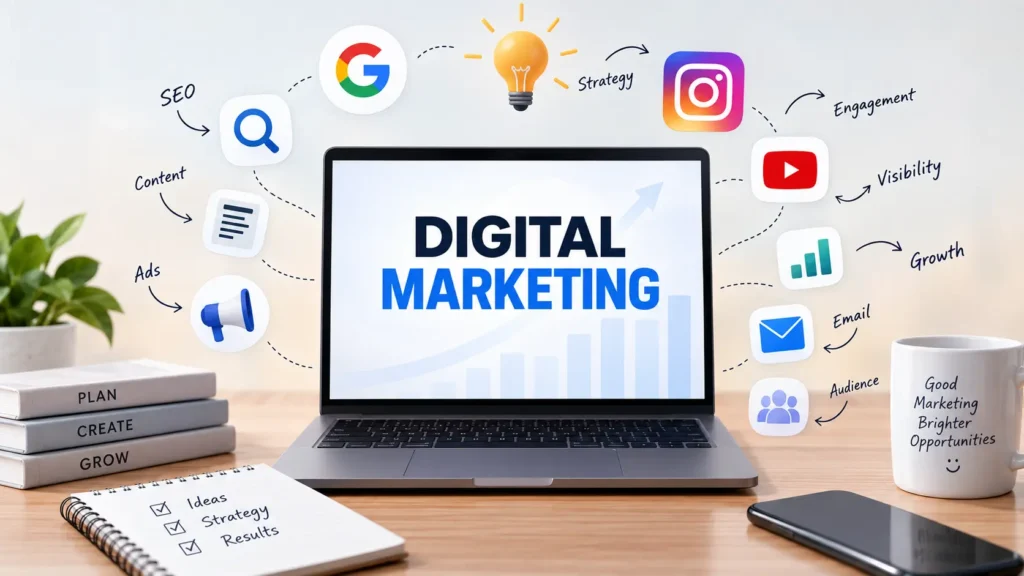
Digital marketing is a collection of niches like SEO, performance marketing, brand strategy and content writing that together help brands to grow a meaningful presence in the digital realm. All these help to optimise various areas of the brand campaign.
1. SEO
Search Engine Optimisation(SEO) is what enables a brand to become more visible. With the right keywords and optimised content, brands can reach their target audience with ease. It also means a more optimised site and user experience, which would brings free traffic regularly.
2. Content Marketing
Content marketing is the strategy of using creative writing to attract a wider audience range. Blog posts, social media posts, guides and videos are often used to educate users and build a connection with them. Instead of saying “buy this,” content marketing says, “hey, this might help you.”
It builds trust first. Sales come later.
3. Social Media Marketing
Creating relatable content through social media platforms like X, Facebook, Instagram and LinkedIn makes the audience habituated to brands and also helps create trust. It feels more personal as brands are capable of building a vibe with customers.
It’s all about talking to your customers directly. Sharing stories about the product and experiences about the services being provided strengthens strong social media marketing.
4. Email Marketing
Even though it is old school, email marketing is very effective in driving sales. With well-researched context and optimised automation, users state that more than 59% of their purchase decisions are influenced by email marketing.
Brands usually share updates and give offers via email, which fosters a personal connection between the brand and customers.
5. Affiliate Marketing
This is similar to word-of-mouth marketing, but through digital means. People and websites that are usually popular are paid to promote products and give positive reviews to boost sales. It is closely linked to marketing based on trust and authenticity.
How digital marketing actually works
The course of Action
Digital marketing helps best when followed through specific steps, avoiding random effort and time. When this defined course of action aligns well brand objectives, results are yielded much easier.
Step 1: Understanding the audience
Before anything, brands figure out who they want to reach.
Age, interests, habits, problems.. everything matters.
Step 2: Creating content or campaigns
Once they know their audience, they create content that fits.
It could be:
- A helpful blog
- A funny reel
- A detailed product guide
Step 3: Choosing the platform
Not everything works everywhere.
Some audiences are on Instagram. Some prefer Google searches. Others check emails daily.
So brands choose where to focus.
Step 4: Promoting the content
This could be organic (free) or paid.
Organic = SEO, social posts
Paid = ads, sponsored content
So brands choose where to focus.
Step 5: Tracking results
This is where digital marketing stands out. Everything aspect can be measured:
- Clicks
- Views
- Conversions
- Time spent
Skills needed for digital marketing
You don’t need to be a genius. But some skills help a lot.
- Basic writing (clear and simple)
- Understanding people and trends
- Creativity
- Data understanding (not too complex, just basics)
- Consistency
The best marketers are not always the most technical. They’re the ones who understand people.
Common myths about digital marketing
1. “It’s easy money”
Not really. It takes time, effort, and learning.
2. “You need to be everywhere”
Nope. Being good on one platform is better than being average on five.
3. “More followers = more success”
Not always. Engagement and trust matter more.
4. “Ads solve everything”
Ads help, but without good content or a strong base, they won’t work well.
The future of digital marketing
Things are always changing, but some patterns are clear.
Short-form video is growing fast, personalization is becoming more important and AI tools are helping with content and data. People prefer authenticity over perfection.
Basically, real wins over perfect.
Even if you’re not planning to become a marketer, it’s a useful skill.
It helps you: to understand how brands influence decisions
Build your own online presence
Start a side hustle or business
Improve career options
In today’s world, knowing digital marketing is like knowing how the internet actually works behind the scenes.
Final Thoughts
Digital marketing isn’t just about selling things. It’s about connecting with people in a space where they already spend time.
It’s subtle, smart, and constantly evolving.
At its core, it’s simple:
Find the right people, share something valuable, and build trust over time.
No tricks. No shortcuts. Just understanding people and showing up consistently.
And once you get that, everything else starts making sense.